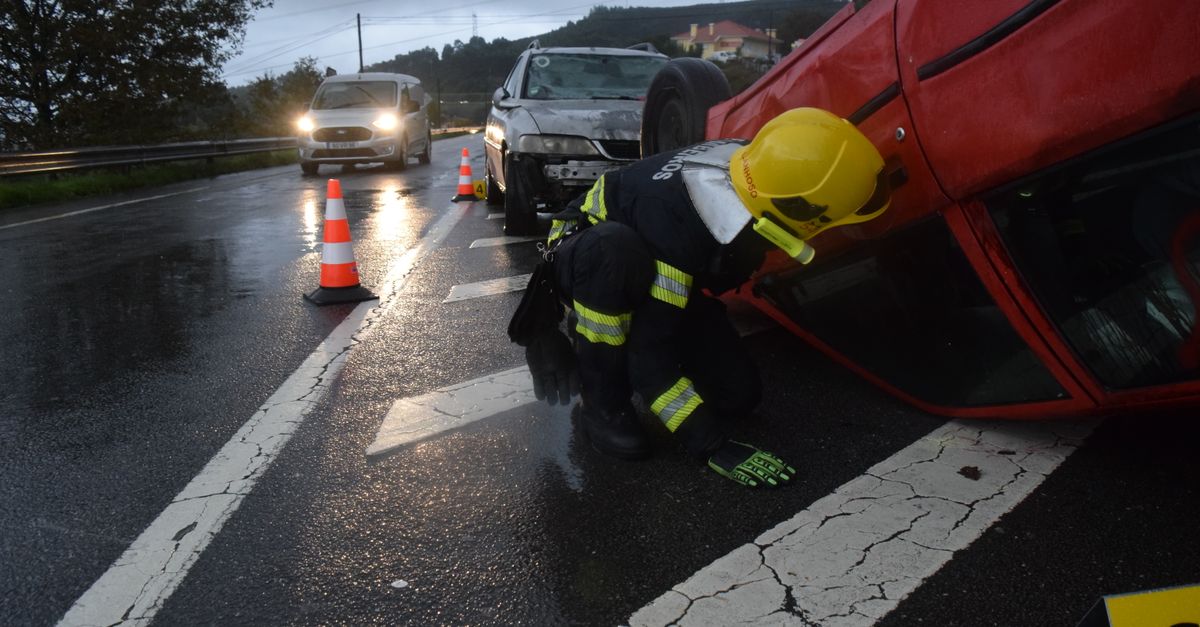
A few months ago, I was driving through a busy intersection, focused on the car ahead. It was a brand new model, boasting all the latest driver-assist tech, including automatic emergency braking (AEB). Suddenly, the car in front of me slammed on its brakes, hard. My first thought was, “No problem, their AEB will handle it.” And then I saw the brake lights still on, heard the screech, and watched in slow motion as they rear-ended the car in front of them. The crash wasn’t severe, but it was a rude awakening. That incident shattered a common misconception I’d held, and that I hear from countless other drivers: the idea that advanced safety systems like AEB make us immune to accidents.
Automatic emergency braking is a fantastic technology, no doubt. It uses sensors to detect potential forward collisions and, if you don’t react in time, it will apply the brakes to prevent or mitigate an impact. On paper, it sounds like a magic bullet. In practice, however, AEB systems have limitations. They’re not infallible, and relying on them as your primary defense is a dangerous gamble. In my experience, the mistake most often made is confusing driver assistance with driver replacement. If you believe AEB is your ultimate shield, you’re setting yourself up for a potential accident.
Key Takeaways
- Automatic Emergency Braking (AEB) systems have significant limitations, especially in specific lighting, weather, or complex driving scenarios.
- Never treat AEB as a replacement for attentive, defensive driving; it’s a supplemental safety feature.
- Understanding your specific vehicle’s AEB capabilities and, more importantly, its limitations is crucial for safe driving.
- Actively maintaining your vehicle’s sensors and windshield clarity directly impacts AEB system performance.
The Overstated Promise of AEB and Real-World Limitations
The marketing around automatic emergency braking systems can be quite persuasive. Car manufacturers rightly highlight the safety benefits, often showing dramatic demonstrations where a vehicle stops just short of an obstacle. These scenarios, however, are almost always ideal: perfect lighting, clear weather, predictable obstacles, and a vehicle traveling at a moderate speed. What they don’t often show, and what’s vital for drivers to understand, are the specific conditions where AEB struggles or fails entirely.
In my testing and anecdotal observations, poor visibility is the most common culprit. Heavy rain, dense fog, snow, or even direct sunlight can ‘blind’ the radar or camera sensors that AEB relies on. Imagine driving at dawn or dusk, with the sun low on the horizon, shining directly into your car’s forward camera. AEB systems use sophisticated image processing, but glaring light can overwhelm their ability to accurately distinguish objects from background noise. Similarly, heavy snowfall or persistent rain can accumulate on sensors, leading to degraded performance or even temporary deactivation of the system.
Another significant limitation is target recognition and complexity. AEB systems are primarily designed to detect other vehicles, and sometimes pedestrians. However, their ability to identify and react to cyclists, motorcycles, or animals can vary wildly between manufacturers and models. Even more challenging are static objects that don’t fit a typical ‘vehicle’ profile, like construction barrels, debris on the road, or a sudden, unexpected change in traffic patterns. These systems are programmed with algorithms based on common collision scenarios, and anything outside that pre-programmed box can be a blind spot. A few years ago, I witnessed an AEB system fail to react to a large cardboard box that blew onto the highway, simply because its radar signature was too ambiguous.
Speed and reaction time are also critical factors. While AEB can prevent or mitigate low-speed collisions, its effectiveness diminishes rapidly at higher speeds. The laws of physics still apply; a several-thousand-pound vehicle traveling at 70 mph requires a significant stopping distance, and AEB can only apply maximum braking within the physical limits of the vehicle’s brakes and tires. What changed everything for me was realizing that AEB is a last-ditch effort, a buffer, not a primary prevention strategy. It’s designed to reduce the severity of an unavoidable crash, not to eliminate the need for you to drive defensively.
Why Your Driving Habits Must Remain Unchanged
The most dangerous consequence of over-reliance on automatic emergency braking, or any driver-assist technology, is the erosion of defensive driving habits. AEB is a safeguard, not a license to be less vigilant. The mistake I see most often is a subtle, subconscious shift in driver behavior, where the belief that the car ‘has your back’ leads to less proactive driving.
For example, maintaining an adequate following distance is a fundamental principle of safe driving. It gives you time to react, to brake, or to steer away from hazards. With AEB, some drivers might feel comfortable tailgating slightly more, assuming the system will intervene if needed. This is incredibly risky. AEB systems have activation thresholds; they don’t react the instant a potential collision is detected. There’s a delay, often measured in milliseconds, but those milliseconds translate to crucial feet of stopping distance, especially at higher speeds. If you’re following too closely, even a perfectly functioning AEB system might only reduce the impact speed, rather than preventing the collision altogether. In my own driving, I’ve had to actively fight the urge to relax my attention, reminding myself that the technology is there to assist, not to take over.
Similarly, peripheral vision and awareness of your surroundings are paramount. AEB primarily focuses on what’s directly in front of you. It doesn’t account for cars swerving into your lane from the side, or objects coming into your path from an unexpected angle. Over-focusing on the forward-looking AEB capabilities can inadvertently diminish your overall situational awareness. What changed everything for me was adopting the mindset that AEB is like a very good co-pilot who only speaks up when absolutely necessary. You wouldn’t stop paying attention just because your co-pilot is awake; you’d still be in charge.
Furthermore, AEB systems don’t account for driver input during an emergency. If you’re already actively braking or swerving, the system might not engage or might react differently. This means hesitation or reliance on the system can actually be counterproductive if your own instinctual reaction is better suited to the specific emergency. You, the human driver, still possess a level of judgment, adaptability, and contextual awareness that AEB systems, in 2026, simply do not. Prioritizing your own alert driving is the only reliable safety net.
Understanding Your Vehicle’s Specific AEB System
Not all automatic emergency braking systems are created equal. This is a critical point that many drivers overlook, assuming AEB is a monolithic feature. The reality is that there’s a wide spectrum of capabilities, even within the same manufacturer across different model years. What changed everything for me was digging into the specifics of my own car’s system, rather than relying on general assumptions.
First, know what types of obstacles your system is designed to detect. Is it only vehicles? Does it include pedestrians, cyclists, or large animals? Some more advanced systems now incorporate junction assist, which monitors cross-traffic when turning. If your system is older or more basic, it might only react to cars directly ahead. Consult your vehicle’s owner’s manual. This isn’t just a suggestion; it’s a necessity. The manual will detail the exact capabilities, limitations, and operating conditions.
Second, understand the speed range at which your AEB operates. Many systems only function below a certain speed threshold, often around 30-40 mph, for full autonomous braking. Above that, they might only provide partial braking to reduce impact speed, or they might deactivate entirely. Driving a car with AEB that only fully engages at city speeds, but relying on it at highway speeds, is a recipe for disaster. My experience taught me that knowing these numbers helps recalibrate my expectations.
Third, be aware of sensor types and locations. AEB systems typically use a combination of radar, lidar, and camera technology. Radar is good for distance and speed but struggles with object classification. Cameras excel at object recognition but are vulnerable to visibility issues. Knowing where these sensors are on your car (e.g., behind the rearview mirror for the camera, in the lower grille for radar) helps you understand potential blind spots or vulnerabilities. Some systems even incorporate ultrasonic sensors for low-speed maneuvering and parking assistance.
Finally, understand how your system communicates. Does it provide audible warnings, visual alerts on the dashboard, or haptic feedback (like a vibrating steering wheel or seat)? How aggressive is the initial warning versus the automatic braking? Some systems are more subtle, giving you a chance to react first, while others are more immediate. Knowing these nuances helps you interpret the car’s signals correctly and avoids confusion in a critical moment. Don’t assume; verify.
The Role of System Maintenance and Sensor Clarity
Just like any other critical component of your vehicle, the hardware and software that enable automatic emergency braking require proper maintenance. The mistake I see most often is drivers treating these sophisticated sensor arrays as ‘set it and forget it’ features. In reality, sensor clarity and system health are paramount to reliable AEB performance.
Consider the forward-facing camera, often mounted behind the rearview mirror or at the top center of the windshield. If your windshield is dirty, cracked, or obscured by debris, the camera’s ability to ‘see’ the road ahead will be compromised. A smudge, a bug splat, or even a build-up of ice or snow can severely degrade its performance. In my experience, a surprising number of AEB warnings or failures can be traced back to a simple, dirty windshield. Regularly cleaning your windshield, particularly the area in front of the camera, is a basic but often overlooked maintenance step.
Similarly, radar units are often located in the front bumper or grille. These locations are susceptible to road grime, mud, snow, and even minor cosmetic damage. A bent grille slat or a thick layer of dried mud can interfere with the radar’s signal, preventing it from accurately detecting objects. It’s not uncommon for minor fender benders, even those that seem superficial, to misalign or damage these sensors, rendering the AEB system ineffective or prone to false positives/negatives. What changed everything for me was realizing that every scratch or dent near a sensor isn’t just cosmetic; it’s a potential safety compromise.
Beyond external cleanliness, software updates and professional calibration are also crucial. Like any computer system, AEB relies on complex algorithms that are continually refined. Your dealership may offer software updates that improve performance, expand capabilities, or fix bugs. Furthermore, if your vehicle has been involved in a collision, even a minor one, or if the windshield has been replaced, the sensors often require professional recalibration. A slight misalignment can cause the system to misinterpret distances or angles, leading to dangerous errors. Don’t skip these professional checks; they’re essential for ensuring your AEB system is operating as intended.
AEB is a Safety Net, Not a Substitute for Engagement
The fundamental truth about automatic emergency braking is this: it’s a sophisticated safety net, not a replacement for an engaged driver. Embracing this distinction is what changed everything for my understanding of modern vehicle safety features. Thinking of AEB as a backup system, rather than a primary mode of operation, significantly recalibrates your approach to driving.
When you get behind the wheel, your primary responsibility is to actively monitor your surroundings, anticipate potential hazards, and react appropriately. AEB is there for those moments when human vigilance falters, or when a sudden, unavoidable situation demands an immediate, forceful response faster than a human can typically execute. It’s like an airbag: you hope you never need it, but you’re glad it’s there if things go wrong. You wouldn’t drive recklessly simply because you have airbags; the same logic applies to AEB.
Furthermore, relying too heavily on AEB can lead to what’s known as ‘automation complacency.’ Over time, if the system consistently handles near-misses, your brain can start to offload some of the cognitive burden of driving to the car. This makes you less prepared and slower to react when the system inevitably encounters a scenario it can’t handle, or when it deactivates due to environmental conditions. My experience with numerous advanced driver-assist systems has reinforced that active engagement is the only constant. The technology is an aid, not a solution.
Maintain proper following distances, stay alert, anticipate traffic flow, and always be prepared to take evasive action. Your eyes, your brain, and your quick reactions are still the most advanced safety features in any vehicle. AEB is a powerful tool to support your safe driving, not to do it for you. It’s crucial to understand this boundary between human and machine to truly maximize safety on the road.
Frequently Asked Questions
How effective is AEB in preventing all types of collisions?
AEB is most effective at preventing or mitigating rear-end collisions with other vehicles and, in some cases, pedestrians, especially at lower speeds. Its effectiveness diminishes at higher speeds and with more complex obstacles like cyclists, animals, or certain types of debris. It’s not designed to prevent all types of collisions, such as side impacts or head-on crashes where a forward sensor isn’t the primary detection method.
Can AEB be turned off in my car?
Most modern vehicles allow you to temporarily disable the AEB system through the infotainment screen or a dedicated button. However, it typically reactivates with each new ignition cycle. Check your owner’s manual for specific instructions on how to manage your vehicle’s AEB settings, as this can vary widely.
Does AEB work in reverse?
Standard automatic emergency braking (AEB) systems primarily focus on forward-facing collision detection. However, many vehicles now offer Rear Automatic Braking (RAB) or Rear Cross-Traffic Braking (RCTB) as separate features. These systems use rear sensors to detect obstacles or cross-traffic when backing up and can apply the brakes automatically. It’s a distinct system from forward AEB.
What are ‘false positives’ with AEB systems?
False positives occur when an AEB system incorrectly identifies a non-threat as a potential collision and applies the brakes unnecessarily. This can happen due to glare, shadows, reflections, changes in road texture, or misinterpretation of objects by sensors. While frustrating and potentially startling, most modern systems are designed to minimize these occurrences. They are often a sign that a sensor might be dirty or misaligned.
How can I ensure my AEB system is working correctly?
Regularly clean your windshield and ensure all forward-facing radar or camera sensors (typically in the grille, bumper, or behind the rearview mirror) are free from dirt, ice, or damage. Adhere to your vehicle’s recommended maintenance schedule and address any warning lights related to driver-assist systems promptly. If your vehicle has had a windshield replacement or front-end collision, professional sensor recalibration is often necessary.
Is AEB considered a form of autonomous driving?
No, AEB is a driver-assist safety feature, not autonomous driving. It’s a reactive system designed to intervene in specific, dangerous situations. Autonomous driving implies the vehicle is capable of operating itself without constant human input across a wider range of driving tasks and conditions.
The Road Ahead: Driving with Smart Assistance
Automatic emergency braking is a powerful advancement in automotive safety. It has the potential to save lives and reduce injuries, and its increasing prevalence is a net positive for road safety. However, it’s crucial to approach this technology with a clear understanding of its role: AEB is a sophisticated backup, not a primary driver. The incident I witnessed firsthand, and countless others I’ve observed, cemented this perspective for me. It’s a tool that assists an attentive driver, but it doesn’t replace the need for constant vigilance and sound judgment.
As these systems become even more advanced, the temptation to relax our focus will only grow stronger. Resist that urge. Continue to practice defensive driving, maintain adequate following distances, and stay acutely aware of your surroundings. Understand the specific capabilities and limitations of the AEB system in your car, and ensure its sensors are always clean and in good working order. Your most important safety feature will always be your own engaged attention. Drive smart, drive safe, and remember that technology is there to support you, not to take the wheel entirely.